FDU Partners with Veterans Valor to Support Healing Garden at Frelinghuysen Arboretum
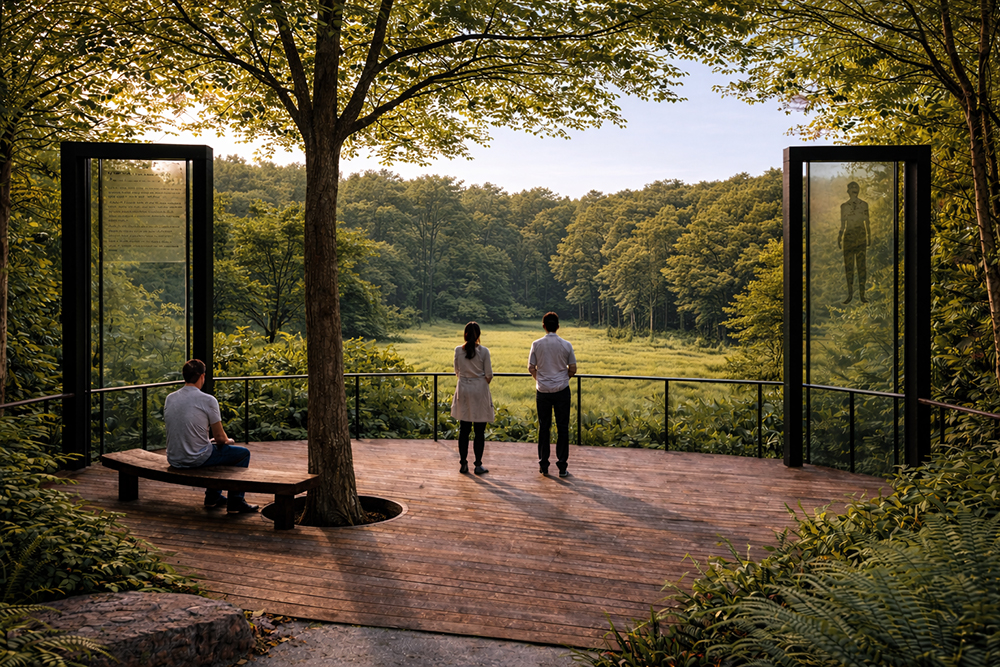
This rendering shows the proposed integration of technology into the veterans healing garden.
By Kenna Caprio
May 6, 2026 — Soon veterans, families and visitors will be able to visit a new Healing Garden at Frelinghuysen Arboretum in Morris Township, N.J.
The University is one of several community partner organizations and institutions supporting the garden.
“The garden will offer veterans and visitors a sense of calm and a sense of connection to nature,” says Martha Garcia, director of veterans services at FDU. “Our hope is that the garden will help veterans and families feel supported through tough times. The Healing Garden will be a space that honors the service and sacrifice of our veterans, while providing a peaceful environment for reflection, connection and healing.”
In the spring of 2025, Garcia met with Will Draper, executive director of Veterans Valor, a nonprofit offshoot of the Rotary Club of Morristown, N.J., “dedicated to healing veterans through the restorative power of nature, art and human connection.” With Veterans Valor and the Rotary Club spearheading the project, Draper asked Garcia and FDU to join the effort.
“The Healing Garden is designed as a journey through distinct phases of a wounded veteran’s experience, such as medevac, triage and hospital care, recovery and new life. There will also be a tribute to those veterans who didn’t make it, either because they died in combat, or lost the inner war after they got home. The fallen garden is the current focus for fundraising, as new life and the gateway to the garden are already funded,” says Draper. “We want visitors — veterans and civilians alike — to take that journey and feel it, not just observe it.”
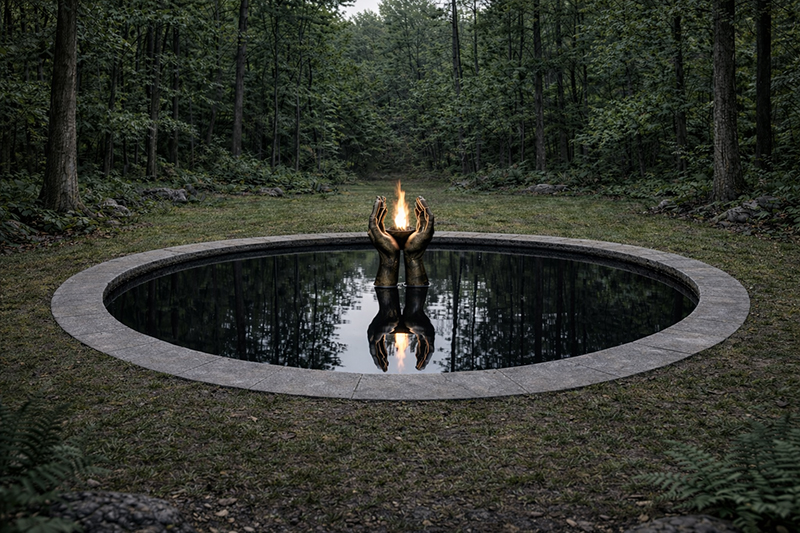
The proposed rendering for the fallen garden centers on a bronze sculpture of hands rising from still water and cradling a flame.
Community representatives attended a groundbreaking and tree planting ceremony on November 13, 2025. Construction planning and work are underway in two of the garden spaces, with more to come as funding is secured.
One of FDU’s major contributions to the project will be a digital spine, developed by its Center for Artificial Intelligence. Visitors will be able to access the Pathway to Peace Digital Spine via their smartphones and will be guided by AI docents. Draper aspires to one day tie in a network of holographic terminals.
“FDU’s Center for Artificial Intelligence is specifically guiding the design of the AI-assisted interpretive layer and the secure digital infrastructure,” says Christopher Stubbs, director of the center and assistant professor of mechanical engineering and mechanical engineering technology. “The spine will feature a narrative progression through the seven garden sections, pairing personal stories with plain-language clinical explanations of concepts like moral injury and post-service vigilance. It will include structured information to help visitors recognize trauma responses and identify local pathways for support.”
FDU has a strong and thriving community of military-connected students and alumni. In her role, Garcia often talks about the importance of supporting veterans as they transition from active service back to civilian life. On campus, resources can include psychological services; academic support, through tutoring and advising; financial help and clarification of military benefits. Out in the community, it can mean connecting veterans and civilians for meaningful conversations in safe spaces, allowing both groups to find calm and understanding.
“Service doesn’t end when uniforms are set aside. Some wounds remain long after service concludes,” says Garcia. “These wounds shape not only those who carry or carried them, but also families, workplaces, classrooms and civic life. Addressing those wounds is not only a medical concern. It is a civic responsibility shared by the communities that benefit from that service. The Healing Garden and the Pathway to Peace Digital Spine will create a powerful space that not only honors service, but also fosters healing, education and community engagement.”