FDU Researcher Helps Rewrite the Bat Family Tree in Landmark Nature Study
Melissa R. de Waal’s annual fieldwork in Belize, supported by FDU start-up funds, helped supply genetic material that filled key gaps in the largest bat genome and fossil study ever undertaken.
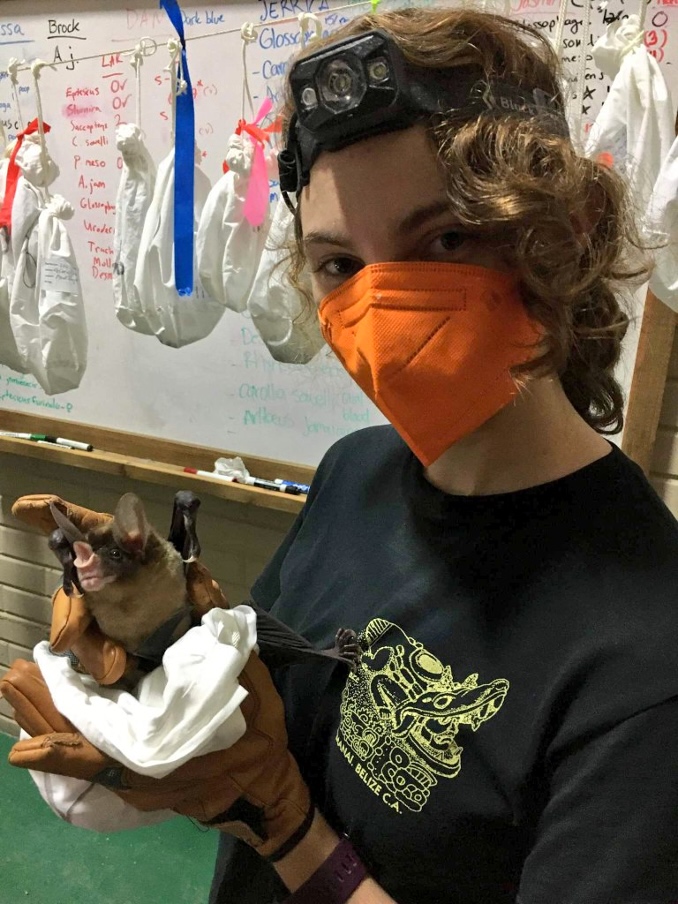
Melissa R. de Waal, Ph.D., Assistant Professor of Microbiology
September 24, 2026 — A Fairleigh Dickinson University faculty member is among more than 130 researchers worldwide whose work is featured in a landmark study published today in Nature, revealing that bats most likely originated in Europe around 65 million years ago before spreading across the globe.
Melissa R. de Waal, Ph.D., Assistant Professor of Microbiology in FDU’s Department of Biological Sciences, Gregory H. Olsen College of Engineering and Science, contributed genome-quality tissue samples collected during annual fieldwork expeditions to Belize, supported by start-up funds from FDU. Over the past five years, that fieldwork focused on bat species previously unrepresented in the bat tree of life, filling gaps that were essential to the study’s scale and conclusions.
“This research was an enormous effort to answer a question scientists have been asking for decades: where did bats come from, and how did they evolve?” said de Waal. “It took the combined power of field biologists, paleontologists, geneticists and computational biologists to finally lay the debate to rest, the sheer number of authors on this paper is a testament to how much science stands to gain when we all pull together toward a common goal.”
“My own contribution grew out of fieldwork expeditions I’ve taken each year to Belize, supported by start-up funds from FDU, where we collected genome-quality tissue samples from bat species previously unrepresented in the bat tree of life,” de Waal added.
The study, conducted as part of the international Bat1K consortium, combined 103 bat genomes and 44 fossils, generated and analyzed by 137 researchers from 64 countries, to produce the largest combined bat genome and fossil study ever undertaken. The findings overturn earlier hypotheses that placed bats’ origins in Asia, Africa or North America, and show that echolocation and powered flight likely evolved together near the dawn of bat evolution.
Beyond resolving decades-old questions about bat evolution, the genomic resource built for the study gives scientists a new framework to investigate the genetic basis of bats’ remarkable disease resistance and long lifespans — traits that could eventually inform human research into aging and immunity.
Title: Reference genomes and fossils revise bat family phylogeny and biogeography
Journal: Nature
DOI: 10.1038/s41586-026-11007-3
Link: https://www.nature.com/articles/s41586-026-11007-3