FDU Students Compete in Health Innovation Competition
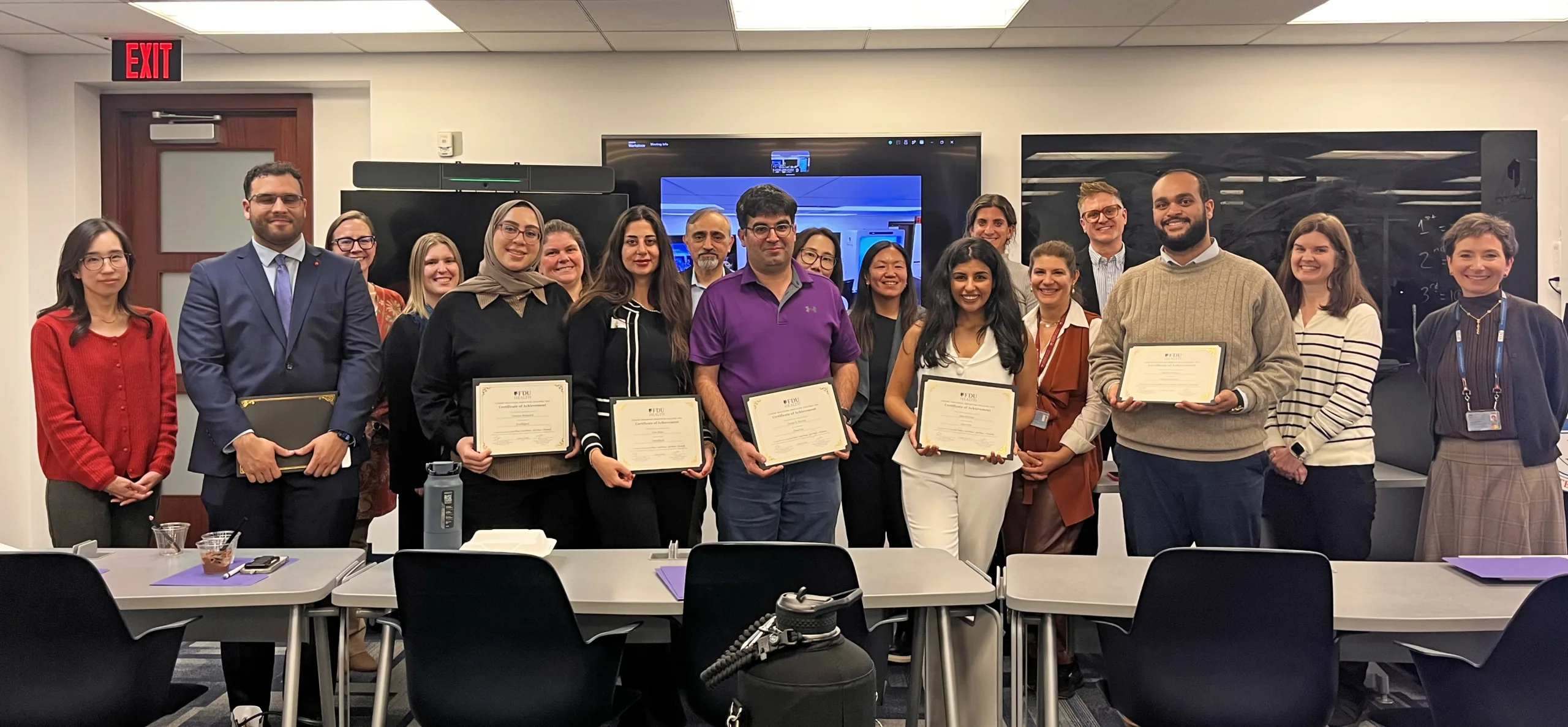
Five student teams presented their healthcare innovations at the inaugural challenge.
October 29, 2026 — At the Student Healthcare Innovation Challenge 2026 on October 28, five student teams presented their ideas for advancements in patient care and community health.
Elen Soliman, a graduate student in the physician assistant program, won first place for her pitch — AfterVisit. Second place went to Mena Kerellas, a doctoral student in the pharmacy program, for Discharge2Home and third place to George E. Stevens, a graduate student in the public health program, for ClearCare. See details on all the student entries below.
“Innovation matters most when it solves real problems for real people. Our students see the gaps in patient care every day, and this challenge gives them a platform to do something about it,” said Hyunah Cho, professor of pharmaceutical sciences and executive director of health innovation and strategy.
The judges panel was comprised of faculty members from across the College of Pharmacy and Health Sciences — representing the pharmacy, physician assistant studies, occupational therapy, public health, social work and psychology academic programs.
“This year’s finalists are tackling challenges patients face in everyday life, from understanding discharge instructions and preventing medication errors at home to detecting silent disease earlier,” said Cho. “Their ideas show what’s possible when students combine their clinical training and creativity to make a meaningful impact on health.”
Prizes for first, second and third place were awarded through a humanics gift given by digital health advocate Stephen K. Klasko, MD, MBA.
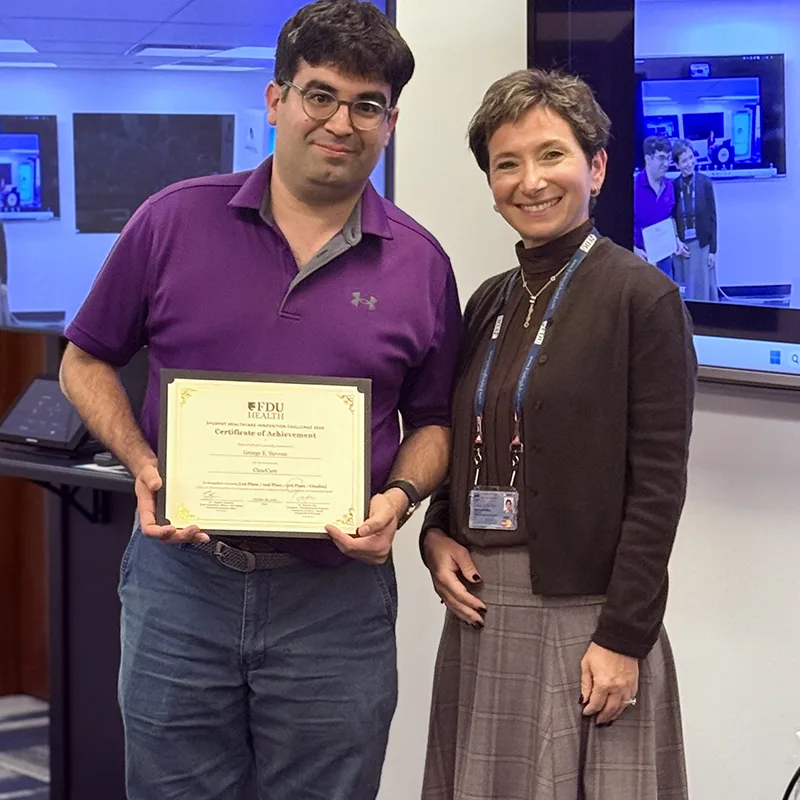 George E. Stevens, Public Health graduate student
An AI-assisted tool that turns complicated medical documents, such as discharge instructions and medication directions, into easy-to-read versions for patients. It uses plain language, dyslexia-friendly fonts, read-aloud, checklists, and color-coded icons. It focuses first on patients with dyslexia, and clinicians keep final approval of all content.
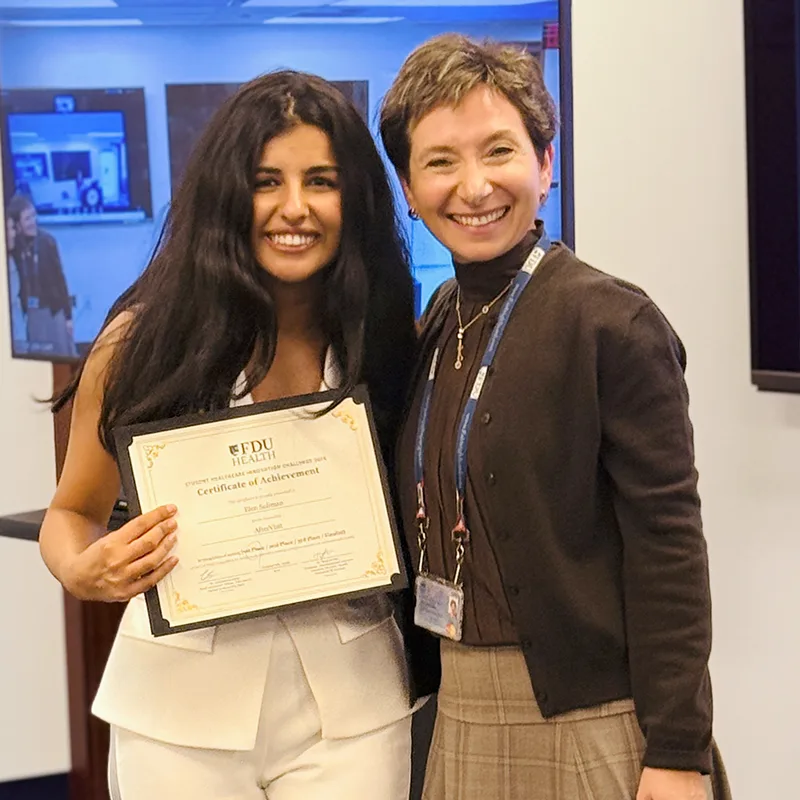 Elen Soliman, Physician Assistant graduate student
A post-discharge tool that delivers each patient’s care instructions by text or phone in their preferred language and in simple terms. It uses “teach-back” questions to confirm the patient truly understands, and it connects confused or at-risk patients to a provider. It targets patients with limited English proficiency, older adults and family caregivers.
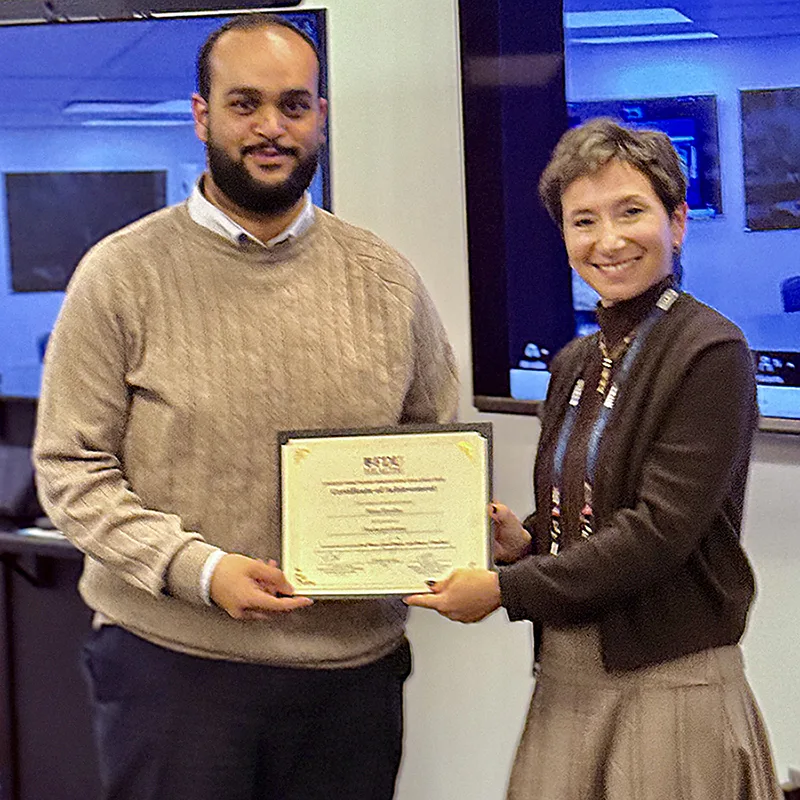 Mena Kerellas, Pharmacy doctoral student
A pharmacist-supported platform that gives patients a simple START / STOP / CHANGE / CONTINUE medication list at discharge. After the patient is home, it checks what they’re actually taking through short questions and photos of their medication bottles. Any mismatch is flagged for a pharmacist to review. A working prototype has been built.
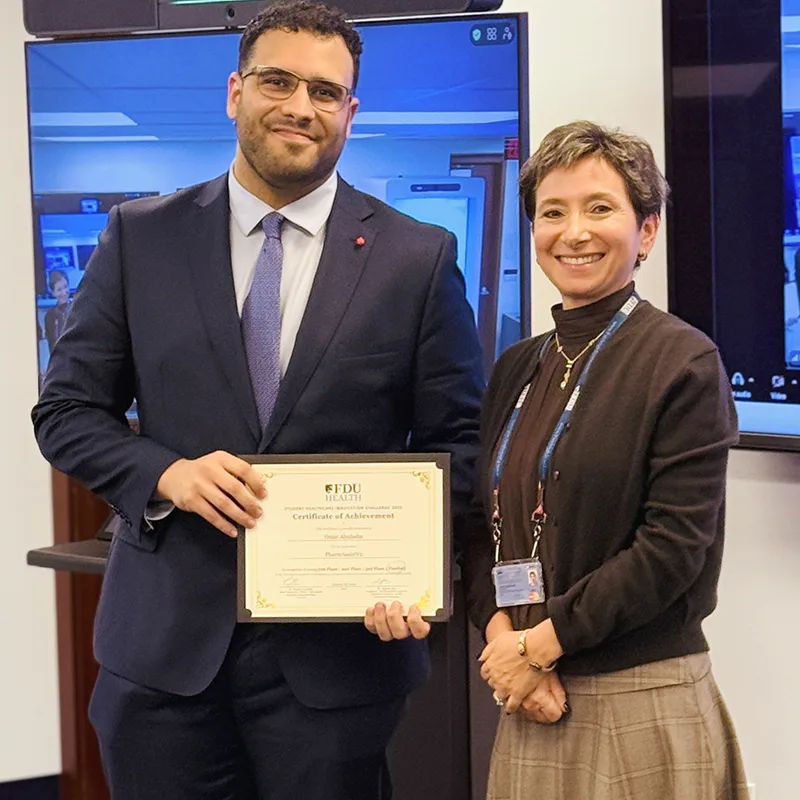 Omar Abufasha, Pharmacy doctoral student
A digital medication-education platform with interactive visuals showing how factors like age, weight, and kidney function affect how a drug works in the body. It has a version for healthcare students and a plain-language version for patients. The patient version also helps users find clinical trials they may be eligible for.
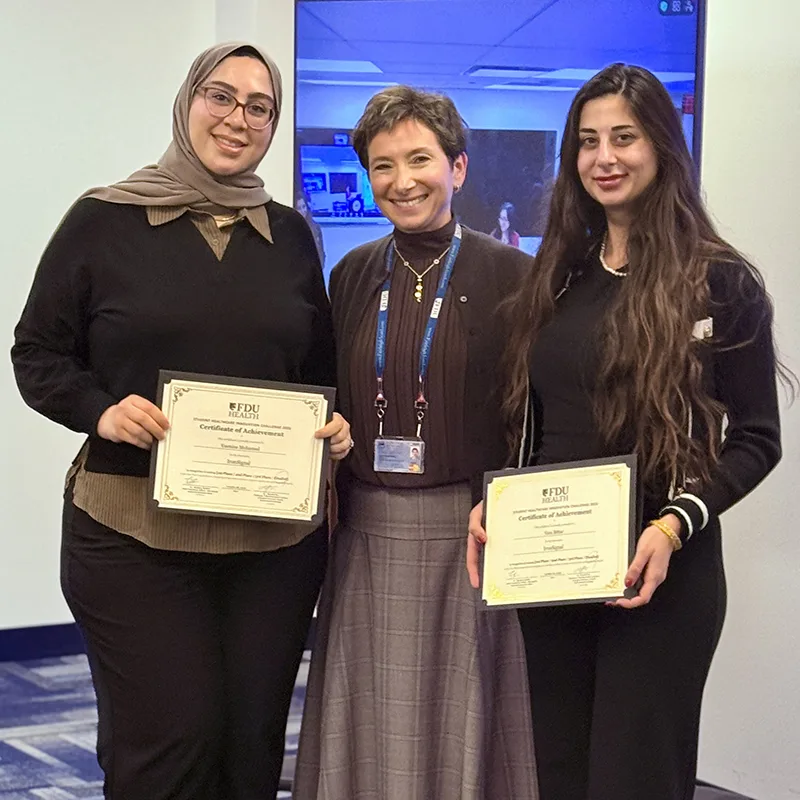 Yasmine Mohamed, Pharmacy doctoral student, and Yara Bittar, Pharmacy doctoral student
An early-detection approach for iron overload, a condition that can stay silent for years while damaging organs. It combines risk factors, lab tests, genetic testing and skin assessment, researching whether skin aging can serve as an early warning sign.