Three Faculty Members Named SEED Grant Round 2 Awardees
Florham Campus faculty members Melissa de Waal, microbiology; Kathleen Frey, pharmaceutical sciences; and Eunsun Kwon, social work, have been named SEED Grant Round 2 awardees through the SEED Grant Funding Opportunity.
As part of Fairleigh Dickinson University’s National Science Foundation (NSF) Enabling Partnerships to Increase Innovation Capacity (EPIIC) grant (Award #2433183), this seed grant program supports small, partnership-driven projects that broaden participation in regional innovation and research ecosystems.
de Waal, Frey and Kwon serve as principal investigators on their respective projects, which run from July 1, 2026, through June 30, 2027.
Melissa de Waal
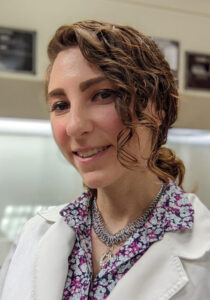
Melissa de Waal
“Collaborative Research to Unlock the Integration Between Dietary Evolution, the Microbiome, and Immunity in Bats,” a collaborative project between Melissa de Waal, a microbiologist and bat natural history expert and Bao Vuong, an immunologist and associate professor of biology from The City College of New York, will investigate how a bat’s diet, its gut bacteria, and its immune system work synergistically to support bat health.
They will develop new laboratory tools to visualize immune cells in bat intestinal tissue and connect those cells to the chemical activity of the bacteria living in the gut, building a clearer picture of how diet ultimately shapes bat immune function.
According to de Waal, the students will gain hands-on, cross-disciplinary experience in immunology, gene evolution, host-microbe interactions. and comparative biology. “The broader scientific community benefits from new, shareable tools and techniques for studying bat immunometabolism, and over the long term, insights into how bats tolerate disease could inform human health research on the links between diet, the microbiome and immunity,” she added.
To read more go to Dr. Melissa de Waal.
Kathleen Frey
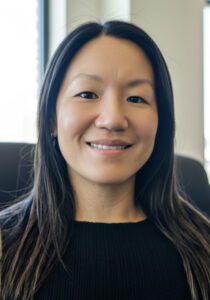
Kathleen Frey
Frey’s project, “Drug Design for Lymphatic Filariasis, a Neglected Tropical Disease,” focuses on the design of new, safer treatments for lymphatic filariasis, a tropical disease caused by a parasitic worm. She is working with Nina Goodey, chemistry/biochemistry, Montclair State University, to use computer modeling to find promising drug compounds, which will now be lab-tested to ensure they safely target the parasite without harming human cells.
Current treatment options the disease such as ivermectin, albendazole and diethylcarbamazine have limited efficacy and adverse drug reactions. Many of these drugs cannot kill the parasite at various lifecycle stages. “This project aims to design and develop safe and effective inhibitors that will kill various lifecycle stages of Wuchereria bancrofti, the parasitic worm that causes the disease,” Frey said.
The project addresses the crucial need to develop safe and effective drugs for lymphatic filariasis, a debilitating disease that affects the quality of life for more than 100 million people worldwide. “From a public health aspect, this research funds the preliminary research needed for drug design and discovery for a disease with unmet medical needs,” Frey added. “Research from this project will also give students at FDU Health both computational and experimental research opportunities that will enhance their learning experience.”
To read more go to Dr. Kathleen Frey.
Eunson Kwon

Eunsun Kwon
Kwon’s project, “Geographic Disparities in Mortality and Hospital-Based Health Care Utilization Among Low-Income Older Adults with Dementia,” examines how differences across communities may contribute to disparities in health care use and mortality among low-income older adults with dementia in New Jersey. She will be working with Takashi Amano, social work, Rutgers University.
According to Kwon, “Research on dementia has traditionally focused on individual factors such as health conditions, income and caregiver support. While these factors are important, they do not fully capture the role of the communities in which people live.”
The team’s newly approved access to restricted New Jersey hospital discharge and mortality data through the Integrated Population Health Data (iPHD) system will enable them to link these records with ZIP code–level data on local health care provider availability from the National Provider Identifier (NPI) Registry and community socioeconomic and demographic characteristics from the American Community Survey (ACS). “This will allow us to examine whether those living in areas with fewer health care resources and greater socioeconomic disadvantage experience greater reliance on hospital-based care or poorer health outcomes,” she said. Aside from benefiting low-income older adults with dementia and the families and caregivers who support them, the project will help build a stronger foundation for aging-related research at FDU Health.
To read more go to Dr. Eunsun Kwon.
SEED Grant Round 3
Round 3 of the SEED Grant Funding Opportunity is now open, with deadline for applications on Saturday, October 10. Faculty are invited to submit proposals for competitive review, with awards of up to $5,000 for one-year projects, up to two awards anticipated, and notifications expected on December 1, 2026.
For more information, including application components, please visit Round 3 – 2027. For questions, please contact Jeiselyn Morales-Blasucci, project coordinator, grants/sponsored projects (Metro), at j.moralesblasucci@fdu.edu.