Dr. Melissa de Waal, PhD
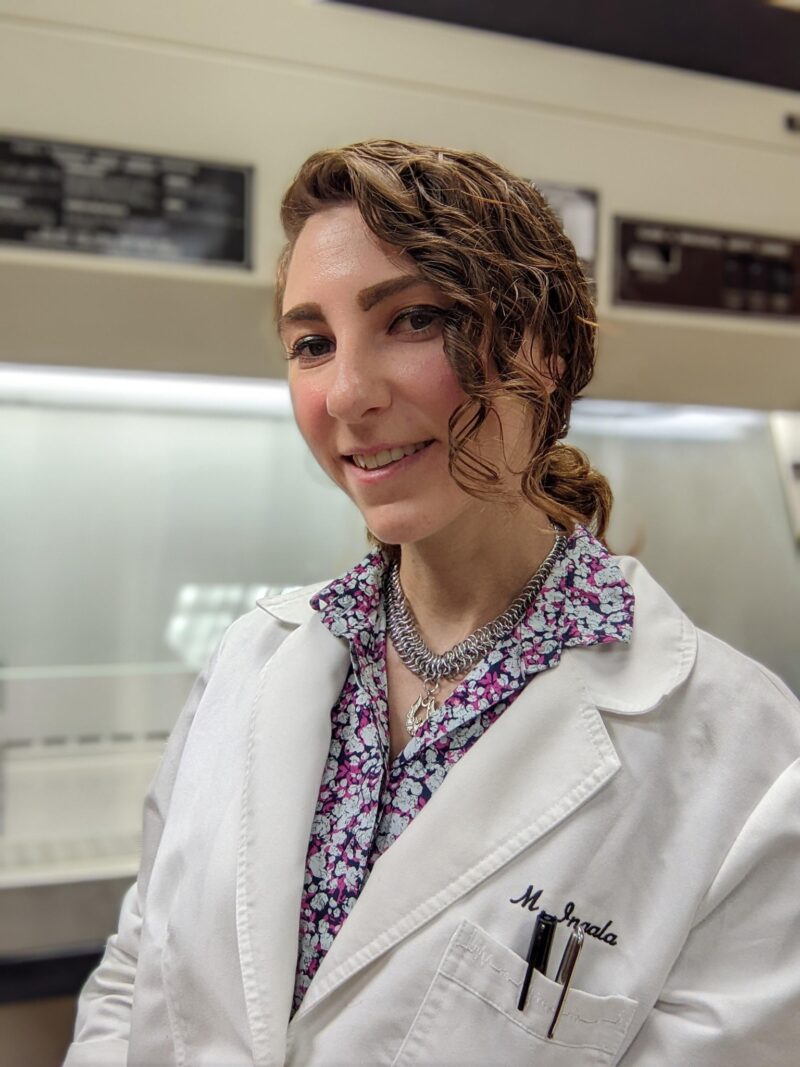
Dr. Melissa de Waal
Assistant Professor of Microbiology
Gregory H. Olsen College of Engineering and Science
Fairleigh Dickinson University
Project Title
Collaborative Research to Unlock the Integration between Dietary Evolution, the Microbiome, and Immunity in Bats
Project Details
Principal Investigator
Dr. Melissa de Waal
Assistant Professor of Microbiology
Gregory H. Olsen College of Engineering and Science
Fairleigh Dickinson University
External Partner(s)
Dr. Bao Q. Vuong, PhD
Associate Professor of Biology
The City College of New York (CUNY)
Project Period
July 1, 2026 to June 30, 2027
Project Description
This collaborative project brings together Dr. Melissa de Waal (Fairleigh Dickinson University), a microbiologist and bat natural history expert, and Dr. Bao Vuong (City College of New York), an immunologist, to investigate how a bat’s diet, its gut bacteria, and its immune system work synergistically to support bat health. The team will develop new laboratory tools to visualize immune cells in bat intestinal tissue and connect those cells to the chemical activity of the bacteria living in the gut, building a clearer picture of how diet ultimately shapes bat immune function.
Problem Addressed
Bats are well-known for carrying pathogens that would kill most other mammals while remaining healthy themselves, yet scientists understand very little about the three-way interaction between diet, gut microbes, and immunity that may underlie this ability. A key reason is that the necessary experts rarely collaborate; immunologists and evolutionary biologists who study bats typically work in separate fields, leaving the full picture fragmented. This project helps to ameliorate this problem by uniting complementary expertise and equipment across two institutions.
Who Will Benefit
The immediate beneficiaries are the trainees who will gain hands-on, cross-disciplinary experience: a PhD student, a postdoc, and undergraduate students at both universities learning methods in immunology, gene evolution, host-microbe interactions, and comparative biology. The broader scientific community benefits from new, shareable tools and techniques for studying bat immunometabolism, and over the long term, insights into how bats tolerate disease could inform human health research on the links between diet, the microbiome, and immunity.
Goals During the Grant Period
The project has two concrete goals for the funding period. First, the team will develop and test a method to identify and image immune cells (T and B cells) in bat intestinal tissue and analyze bacterial genetic data from the same animals to link immune activity to specific microbial chemical pathways. Second, they will use this pilot data to pursue large-scale external funding from public and private sources to tackle the larger question of how diet, microbial metabolic products, and gut immunity combine to shape bat immunity.
Broader Impact
Beyond its scientific findings, the project is designed to create a durable, cross-institutional partnership. It establishes sustained collaboration and cross-training between the two labs, reciprocal participation in each university’s seminar series, and expanded research training for undergraduate and graduate students. By breaking down the barriers between immunology and evolutionary biology, the work lays a foundation for a new, integrated approach to understanding immunity in one of the world’s most unusual and important groups of mammals.