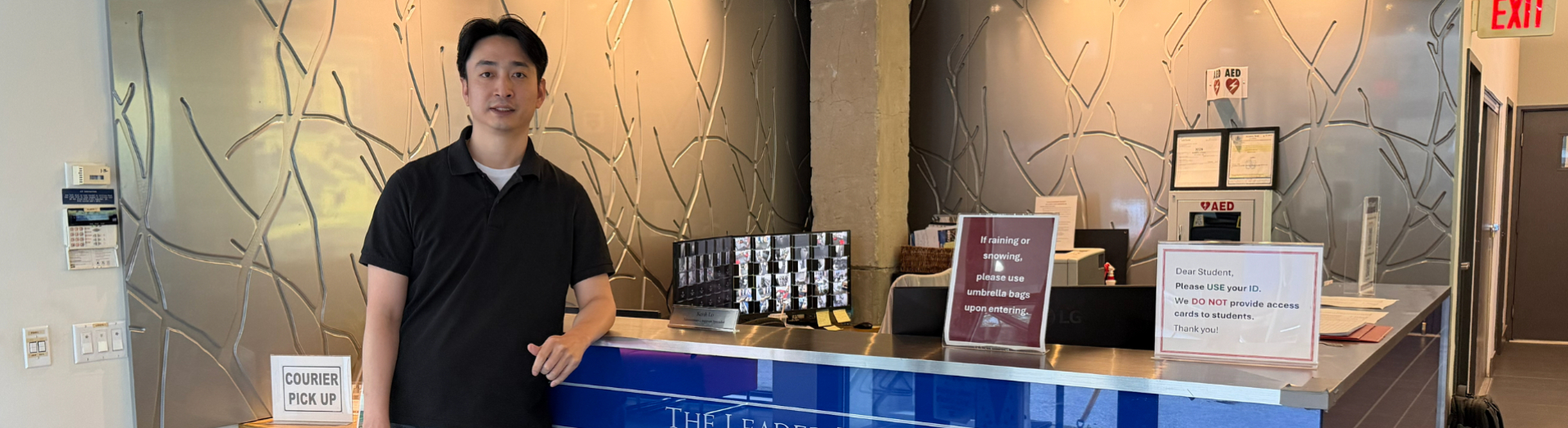
FDU Vancouver Faculty Jeeho Ryoo Publishes Meta-Analysis on Argument Visualization Tools in Higher Education
As higher education continues to embrace digital learning, educators are exploring innovative ways to strengthen critical thinking, academic writing, and student engagement. One approach gaining increased attention is the use of argument visualization tools—digital platforms that help students organize, evaluate, and communicate complex ideas through visual representations. A newly published meta-analysis offers valuable evidence that these tools can enhance learning outcomes, particularly for multilingual learners.
Assistant Professor Jeeho Ryoo, a faculty member at FDU Vancouver, recently co-authored a meta-analysis published in the peer-reviewed journal Technology, Knowledge and Learning (Springer) in May 2026. The study, titled “The Effects of Argument Visualization Tools on Higher Education Learning Outcomes: A Meta-Analysis,” synthesizes findings from 14 studies to examine the impact of argument visualization tools in higher education.
Dr. Ryoo collaborated with Michael Pin-Chuan Lin (Mount Saint Vincent University), Daniel H. Chang (Simon Fraser University), and Vivien Lin (National Changhua University of Education) on the publication.
Strengthening Critical Thinking and Academic Writing
The research found that argument visualization tools can significantly improve students’ critical thinking and academic writing outcomes. The strongest benefits were observed among multilingual and English as a Foreign Language (EFL) learners, highlighting the potential of these tools to support diverse classrooms and inclusive learning environments.
The study also found that students achieved the greatest improvements when argument visualization tools were combined with focused, scaffolded instruction rather than being integrated throughout an entire course. These findings provide practical guidance for educators seeking evidence-based strategies to improve student learning and engagement.
Advancing AI and Education Research
The publication marks another achievement for the AIEDU Lab, led by Dr. Daniel H. Chang and Dr. Michael Pin-Chuan Lin. Throughout 2026, Dr. Ryoo and fellow researchers have contributed to multiple publications and conference proceedings exploring the evolving role of artificial intelligence in education.
Their research has focused on areas including generative AI in computer science and writing education, open-source large language models for teaching and learning, AI-supported assessment design, and the continued development of educational technologies such as MetaMentorAI.
The AIEDU Lab’s research is supported by a Social Sciences and Humanities Research Council (SSHRC) Insight Grant, which funds the development of AI-enhanced tools that promote self-regulated learning in computer science education.
Celebrating Faculty Research Excellence
Dr. Ryoo’s latest publication reflects FDU Vancouver’s ongoing commitment to research that advances teaching, learning, and educational innovation. Through collaborative, evidence-based research, FDU Vancouver faculty continue to contribute to meaningful conversations that shape the future of higher education and create positive impacts for students and educators around the world.
Congratulations to Dr. Jeeho Ryoo and his research collaborators on this outstanding achievement.
-30-
About Fairleigh Dickinson University’s Vancouver Campus
Since 2007, FDU Vancouver has shaped professionals in British Columbia through personal, global and transformational education. As a comprehensive not-for-profit university, FDU Vancouver delivers industry-aligned undergraduate and graduate education in business, health, hospitality and tourism, humanities and information technology. Learn more about FDU Vancouver’s information technology program at fdu.edu/vancouver-bsit
Media Contact
Lester de Guzman
Marketing and Communications, Director
vancouver.communications@fdu.edu