Character Is a Career Skill: Why Knowing How to Do the Job Is Only Part of Being Good at It
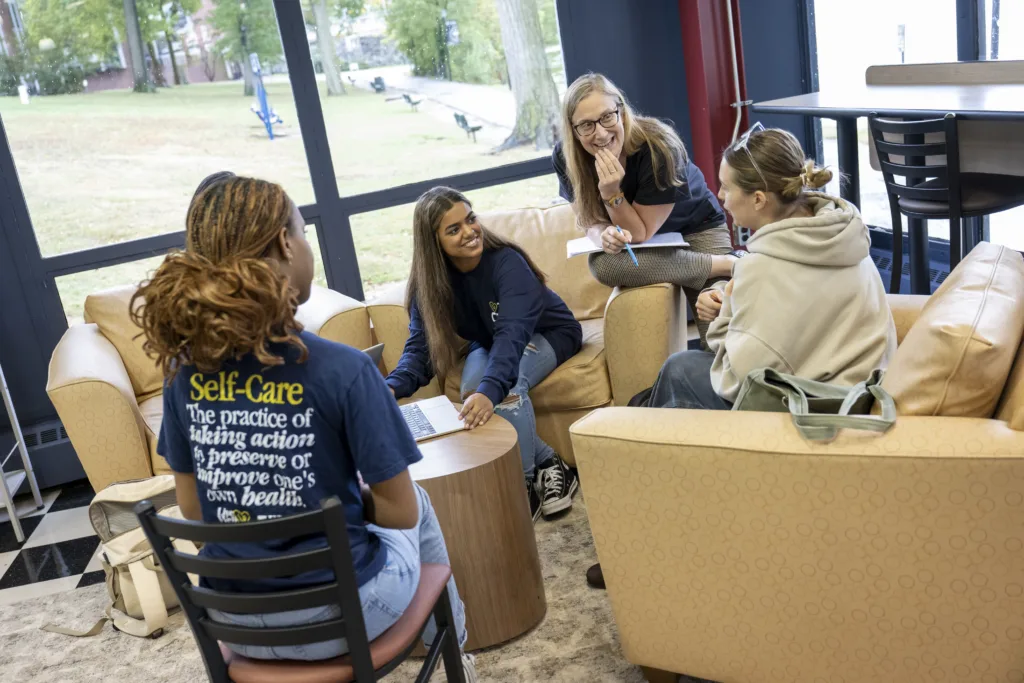
Recently, a newly trained physician assistant sat down with FDU Professor of Psychology Robert McGrath to try something different: a new kind of character coaching built around examining not just a person’s weaknesses but the strengths they may be using too much — or not enough.
Could kindness, for example, make it difficult to set a necessary boundary? Could too much humility keep someone quiet when they are the best person in the room who needs to speak? Could a commitment to critical thinking cross the line into being relentlessly judgmental?
McGrath, a longtime researcher of character, has developed a new coaching model around exactly those questions. Rather than identifying what the physician assistant was doing wrong, he asked her to look more closely at qualities she already possessed and consider when they were serving her — and when they might be getting in her way.
The exercise struck a nerve. By the end of the session, the PA was asking if she could come back in a few months to do it again.
For McGrath, the reaction underscored an idea at the core of the model: Becoming a better professional is not always about correcting a weakness. Sometimes it means developing the judgment to know when, where and how to use your strengths.
This work is taking shape through FDU’s Institute for Character and Leadership, where McGrath is the director of the Center for Character Development and works alongside founding executive director Scott Parsons to make character development a more intentional part of professional education.
That focus helped attract Mike Spano to FDU’s clinical psychology PhD program. After working in technology before entering academia, Spano was particularly interested in McGrath’s combination of psychological research, character development and experience outside traditional academia.
“Knowing your character strengths and leveraging any positive psychology is beneficial to everything that we do in life,” Spano said.
For Spano, understanding how his own strengths work together is not separate from becoming a better clinician or researcher; it is part of learning how to use those strengths more intentionally.
The institute’s work starts from a broader question that Parsons believes universities do not always ask directly: What kind of person should an education help someone become?

Scott Parsons, founding executive director of the Institute for Character and Leadership
“Knowledge tells us what is possible. Character guides what is right,” Parsons said. “Leadership determines how to influence others, and human flourishing is really the ultimate purpose that brings all that together.”
That focus on judgment and self-awareness is a natural extension of FDU’s broader humanics initiative, which pairs professional and technical expertise with human qualities — empathy, agility, critical thinking and ethical judgment — to shape how people use what they know in life and in their work.
If humanics describes the qualities the University wants its graduates to develop alongside professional expertise, Parsons sees the Institute for Character and Leadership as one way of turning that aspiration into something students can practice.
This isn’t about telling students what political, religious or ideological beliefs they should hold. Parsons describes character instead through broadly recognizable human capacities: honesty, courage, humility, empathy, judgment and the ability to become what he calls a better version of yourself.
Parsons spent more than two decades in the Army, including combat deployments in Iraq and Afghanistan, and later taught philosophy and ethics for over a decade at West Point. Those experiences taught him that in high-stakes environments, knowledge and rules can only take someone so far. Healthcare poses a similar challenge: Clinical expertise may define what is possible, but judgment often determines what is right.
At FDU, the goal is to make those questions part of professional preparation rather than separate from it.
McGrath’s character work offers one example. FDU researchers have developed tools to assess character strengths, both underused and overused.

Robert McGrath, professor of psychology and director of the Center for Character Development
For example, too little humility can become arrogance. But too much can mean the most knowledgeable person isn’t speaking up. Kindness can work the same way. So can prudence, self-confidence or critical thinking.
That was the idea behind McGrath’s coaching session with the physician assistant. Rather than creating a list of deficiencies and telling her to correct them, the conversation gave her a framework for examining how the qualities she already possessed showed up in different situations.
For McGrath, that makes character development a strengths-based exercise rather than another performance evaluation.
FDU is beginning to apply that philosophy in other settings as well. With support from Wake Forest University’s Educating Character Initiative, the institute is beginning to work with FDU athletic teams on resilience — not simply telling students to “be resilient,” but breaking the idea down into skills and practices they can develop.
McGrath believes that, through this work, higher education can help students develop judgment, integrity and fairness that people often arrive at much later in life. He describes himself as kinder, more thoughtful, more empathetic and fairer now than when he was younger. Some of that, he said, simply came with age and experience.
“What if someone could begin developing that judgment at 25 instead of discovering it at 45?” said McGrath.
For FDU, that is one of the most exciting promises of building its humanics framework. A university can prepare students to enter a profession — to find the right path, work well with others and adapt as that work changes.
But career preparation doesn’t stop at getting someone ready for a job. It should also help them develop the judgment to decide what kind of professional — and what kind of person — they want to become once they’ve left the classroom.
HealthxHumanics™ (Health By Humanics) is the connective philosophy embedded throughout FDU HealthPath Forward. It ensures our graduates are:
- Tech-fluent and data-literate.
- Grounded in empathy and cultural competency.
- Agile, collaborative and ethically driven.
Our graduates are data-literate and tech-savvy — but equally skilled in human connection. They evaluate innovation through a human-centered lens, ensuring that patients, families, providers and communities remain at the heart of every decision.