The Clinician Who Looks Up: What Technology Can Give Back to Patient Care
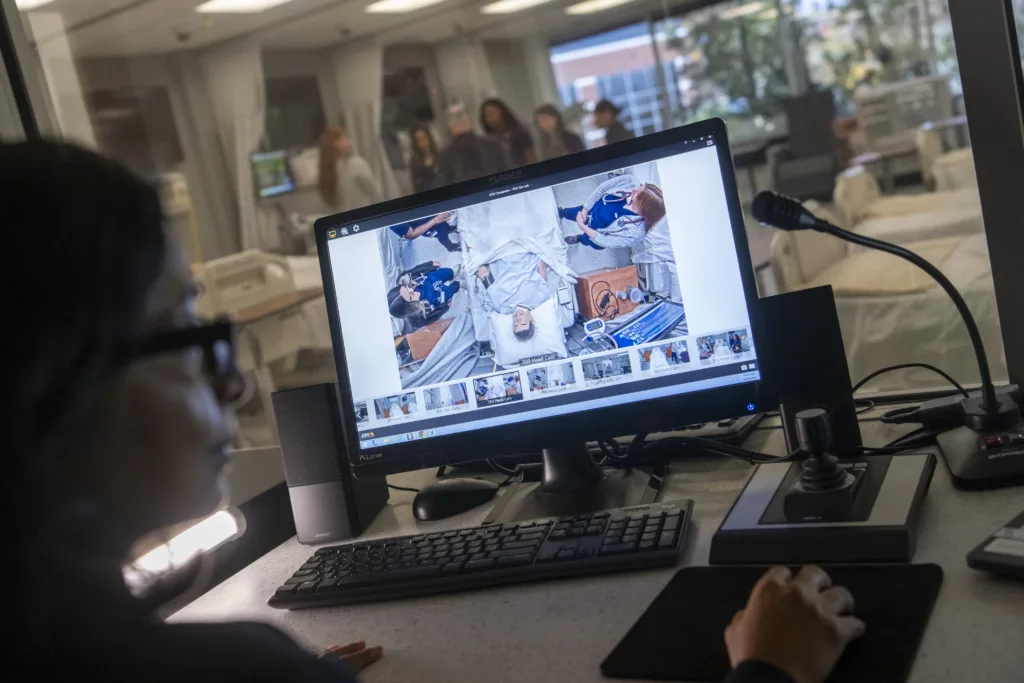
One of the hardest experiences Stephen Klasko, MD, remembers from his years as an obstetrician began when there was nothing medicine could do.
A patient near the end of her pregnancy learned that her baby had died. She still had to go through labor and delivery to complete the stillbirth, carrying grief, anger and questions that had no satisfying medical answer.
In situations like these, physicians are generally trained to understand that their role ends once there is no further medical intervention available. A nurse or another member of the care team could stay with the patient through a stillborn delivery, allowing the attending physician to move on to the next patient who needed medical treatment.
But Klasko stayed with her. “This is when the patient needs me the most,” he said.
The experience gets at something larger than bedside manner. Healthcare is filled with moments when the most important thing a clinician does is not diagnose a condition or calculate a treatment. It is noticing what someone is feeling, asking another question or simply staying in the room.
As artificial intelligence and other technologies become better at the technical work of medicine, Fairleigh Dickinson University is asking how healthcare education can make more room for those moments — not by rejecting technology, but by deciding more intentionally what it should free humans to do. That question is central to FDU’s Humanics Innovation Challenge, which explores how to integrate technological innovation with the human skills essential to healthcare.
FDU President Michael Avaltroni points to ambient listening technology as one example.
“The prime example of where this works well is in the patient experience,” Avaltroni said. “The physician can face you and make eye contact. Sometimes the subtleties in a patient interaction are not verbal.”
For many patients, the experience is familiar: a clinician spends much of the visit entering information into a computer instead of looking at the person in front of them. Ambient listening technology can handle more of that documentation in the background, giving clinicians more freedom to focus on what is happening beyond the words being spoken.
A patient might wince when a physician mentions increasing a medication dose. A clinician focused on a screen may miss it. A clinician looking at the patient can ask why. Maybe the medication caused problems before. Maybe cost is a concern. Maybe the patient is reluctant to take it for another reason entirely.
The technology can capture the conversation. The clinician can notice what the conversation does not say. That attention can carry clinical value of its own.
For Annie Rohan, dean of FDU’s Henry P. Becton College of Nursing and Allied Health, that distinction is familiar. Rohan spent decades in pediatric and maternal-child critical care, where caring for a patient can mean working amid monitors, alarms, screens and machines that are essential to keeping someone alive.
She describes one goal of FDU’s approach as teaching future health professionals to preserve a patient’s dignity even when technology mediates nearly every part of their care: how to get to the person in the bed despite everything surrounding them.
“The endpoint isn’t to learn how to use the technology,” Rohan said. “It’s how they’ve made the person feel human despite having to use this technology. In an intensive care unit, it’s about how to get to that person in the bed despite all the machines, how to really connect.”
Chiara Muscara, a senior psychology student whose research explores personality and AI interaction, draws a similar distinction. Technology may be able to reproduce the language of empathy, she said, but not the experience of sharing space with another person.
“When we look at someone’s eyes, there’s this warmth that comes with connecting with another human being,” Muscara said. “I want to find ways to use these different technologies while keeping what makes us innately human at the center of everything.”
This does not require clinicians to do work that a machine could handle better. In pharmacy, Anastasia Rivkin, dean of FDU’s College of Pharmacy and Health Sciences, sees increasingly sophisticated technology taking over more routine calculations and processing. The opportunity, she argues, is to give pharmacists more time for the work their clinical training also prepares them to do: evaluate the information, make a judgment and talk with patients and families about what happens next.
Rather than treating technology and human-centered care as separate parts of a health professional’s education, FDU is creating opportunities for students and faculty to work with the tools they will encounter in clinical settings and to ask how those tools can create more space for patient care. That work will eventually have a physical home in the Marion Turpan Innovation and Humanics Hub, expected to open on FDU’s Metropolitan Campus in 2027.
Paying attention to the person also means recognizing that the medically conventional outcome is not always the outcome a patient wants.
Klasko, the former CEO of Thomas Jefferson University and Jefferson Health who recently joined FDU’s Board of Trustees and whose seed gift helped launch the Humanics Innovation Challenge, also saw this firsthand from the other side of the exam room after tearing all three of his hamstrings. For someone over 70, the typical recommendation would have been not to surgically reattach them, avoiding a difficult recovery and additional risks.
But Klasko wanted something different: He wanted to run 10 miles again.
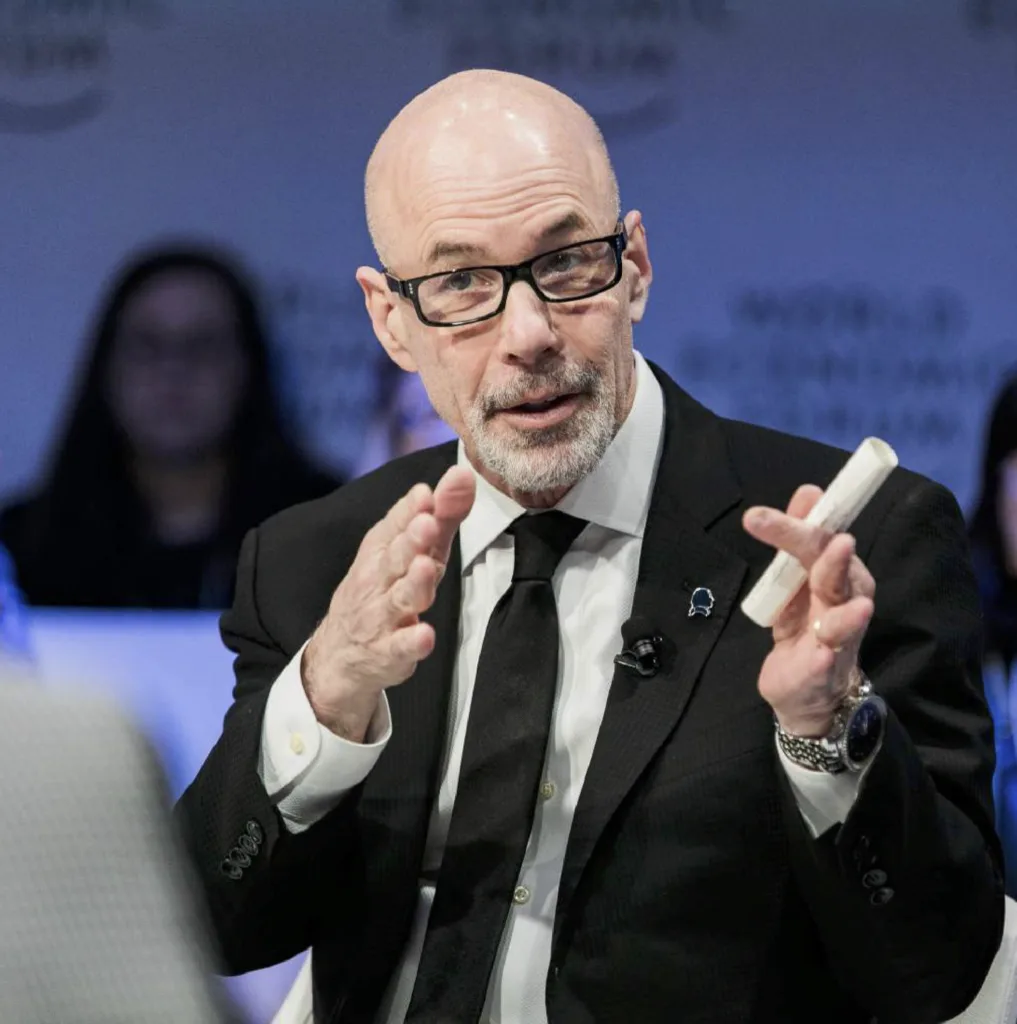
Stephen K. Klasko, MD, a healthcare leader and a member of FDU’s Board of Trustees.
Once his surgeon understood that goal — and understood the risks he was willing to accept to reach it — the treatment plan changed. Klasko underwent surgery tailored around the outcome that mattered to him.
He now points to that experience when talking about the future of personalized care. A technically sound recommendation can incorporate a patient’s age, diagnosis, test results and likely prognosis. Understanding what the patient is actually trying to preserve or get back to requires another question entirely: What matters most to you?
Technology can increasingly help clinicians find the diagnosis, surface patterns and document the visit. The promise of that technology, in FDU’s vision, is not simply greater speed or efficiency. It is giving the clinician more opportunity to look up.
HealthxHumanics™ (Health By Humanics) is the connective philosophy embedded throughout FDU HealthPath Forward. It ensures our graduates are:
- Tech-fluent and data-literate.
- Grounded in empathy and cultural competency.
- Agile, collaborative and ethically driven.
Our graduates are data-literate and tech-savvy — but equally skilled in human connection. They evaluate innovation through a human-centered lens, ensuring that patients, families, providers and communities remain at the heart of every decision.