The New Definition of Expertise: The Future Belongs to More Than Technical Skills
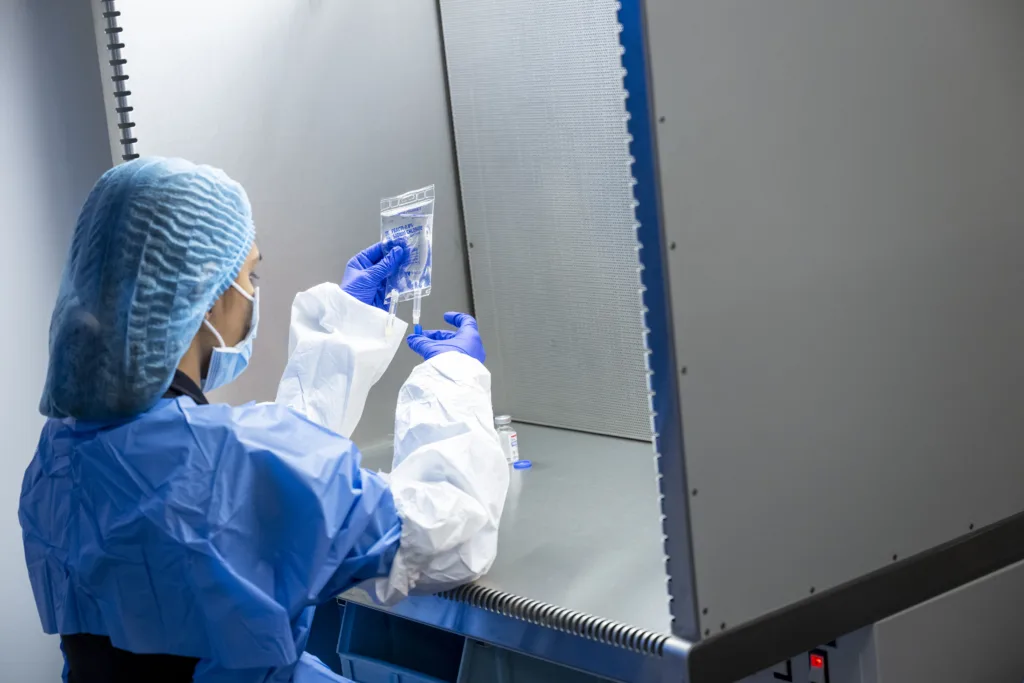
An artificial intelligence platform can calculate a medication dose for a patient in seconds. At Fairleigh Dickinson University, pharmacy students are being taught not to trust it automatically.
In a second-year infectious disease course, students use an AI-enabled pharmacokinetics platform that can account for differences in kidney and liver function, model how a patient will process a drug and recommend a dose — a calculation students once worked through themselves.
But getting the answer is not the end of the assignment.
Students have to determine whether the answer is reasonable, verify it against what they know, decide what they would recommend to the physician, plan how the patient should be monitored and be prepared to explain the decision to the patient and their family.
In other words, technology can produce an answer. The student still has to decide whether it is the right one.
For Anastasia Rivkin, dean of FDU’s College of Pharmacy and Health Sciences, that is where the work of educating the next generation of health professionals is changing.
Technology, she said, has “tremendous capacity to process such a large variety of data.” But ultimately, the clinician must still understand what the data means for the person receiving care.
“When technology becomes sophisticated enough to take away some of the mundane tasks, that frees pharmacists to do what they are trained to do,” Rivkin said.
That shift is at the heart of FDU’s growing emphasis on humanics, an interdisciplinary thread woven throughout its health programs and broader educational mission, with the goal of preparing students for a future in which technological capability and distinctly human skills have to develop together. As artificial intelligence becomes capable of doing more of the processing, calculation and pattern recognition that once defined professional expertise, the University is asking a different question: What skills become more critical for the humans working alongside it?
FDU President Michael Avaltroni frames the answer with three forms of literacy.
“You don’t — and shouldn’t — have to choose,” Avaltroni said. “It’s not a matter of being either technologically literate or human literate. The three critical skills for the future are technological literacy, data literacy and human literacy. We don’t get to pick one at the expense of the others.”
That last category includes many of the abilities that workplaces have historically relegated to “soft skills”: judgment, empathy, communication, cultural competence, adaptability and the ability to work with others. In healthcare, where decisions are never made in a vacuum and a technically correct answer may still need to be interpreted for an individual patient, FDU treats those abilities as professional competencies in their own right.
Some of that means changing how students learn to use technology in the first place.
Annie Rohan, dean of FDU’s Henry P. Becton College of Nursing and Allied Health, compares banning AI in education to banning calculators decades ago. Instead, she wants students to become skilled enough that technology amplifies what they know rather than substitutes for it.
In many courses, traditional assignments are already being reworked around that idea. Rather than simply answering a question that an AI tool could answer for them, nursing students might create their own licensing-exam questions, use AI to improve them and then evaluate whether the result is actually accurate. The goal is not simply to teach students how to prompt a new tool. It is to teach them to interrogate what comes back.
Senior psychology student Chiara Muscara sees a similar approach in her own classes. Some professors encourage students to begin with their own ideas, then use AI almost like a “ping-pong” partner to test, expand or reorganize their thinking.
“Students shouldn’t let AI stop them from questioning everything,” Muscara said. “We have to allow ourselves to be curious.”
The promise is not simply that students can work faster. It is that less time spent memorizing, calculating and reproducing information can create more room to practice the parts of professional life that are harder to automate.
Benjamin Freer, dean of the Marion Turpan College of Psychology and Counseling, has helped build empathy training around specific behaviors: paying close attention, looking beneath someone’s immediate reaction for what may be driving it and learning to respond thoughtfully rather than react automatically. The training has moved from an optional offering into pharmacy, occupational therapy and nursing curricula.
In that model, empathy is not something a future clinician either happens to possess or does not. It is something that can be practiced, examined and improved.
Stephen Klasko, MD, a longtime healthcare leader and now an FDU trustee, who has helped shape FDU’s approach to humanics, sees the rise of AI as a reason to rethink what health professions education has traditionally valued. Medical education, he argues, has spent generations selecting and training people for memorization and diagnosis — the very capabilities computers are increasingly positioned to perform faster and at greater scale.
“We spent 100 years teaching health professionals to think like computers,” Klasko said. “Now we have the best computers; we need to teach them to be human again.”
At FDU, that shift is already showing up in the classroom.
Back to the infectious disease course, the AI-assisted dosing platform can produce a recommendation in seconds. But the student’s work is just getting started: Does the recommendation make sense? Is it right for this patient? And can they explain why?
The new technology may change how students arrive at an answer. FDU’s task is to prepare them for everything that comes next.
HealthxHumanics™ (Health By Humanics) is the connective philosophy embedded throughout FDU HealthPath Forward. It ensures our graduates are:
- Tech-fluent and data-literate.
- Grounded in empathy and cultural competency.
- Agile, collaborative and ethically driven.
Our graduates are data-literate and tech-savvy — but equally skilled in human connection. They evaluate innovation through a human-centered lens, ensuring that patients, families, providers and communities remain at the heart of every decision.