Knowing Who to Call: Why Better Healthcare Depends on Better Teammates
There’s been a mistake: a patient received the wrong medication.
For health professions students at Fairleigh Dickinson University, figuring out what went wrong is only part of solving the problem. There are other, equally important questions to work through: How should the error be reported? Who needs to know and who is part of the solution? What perspective does each person bring? And how does a team respond without turning the exercise into a search for someone to blame?
In interprofessional ethics courses at FDU, nursing and pharmacy students work through difficult scenarios like these together. The point is not to turn a nurse into a pharmacist or a pharmacist into a nurse. It is to learn how the other thinks — and when they need each other.
For Anastasia Rivkin, dean of FDU’s College of Pharmacy and Health Sciences, this is critical to being a good clinician.
“We work with all these programs together to educate our students on how to effectively communicate and how to collaborate on a team around patient care,” Rivkin said.
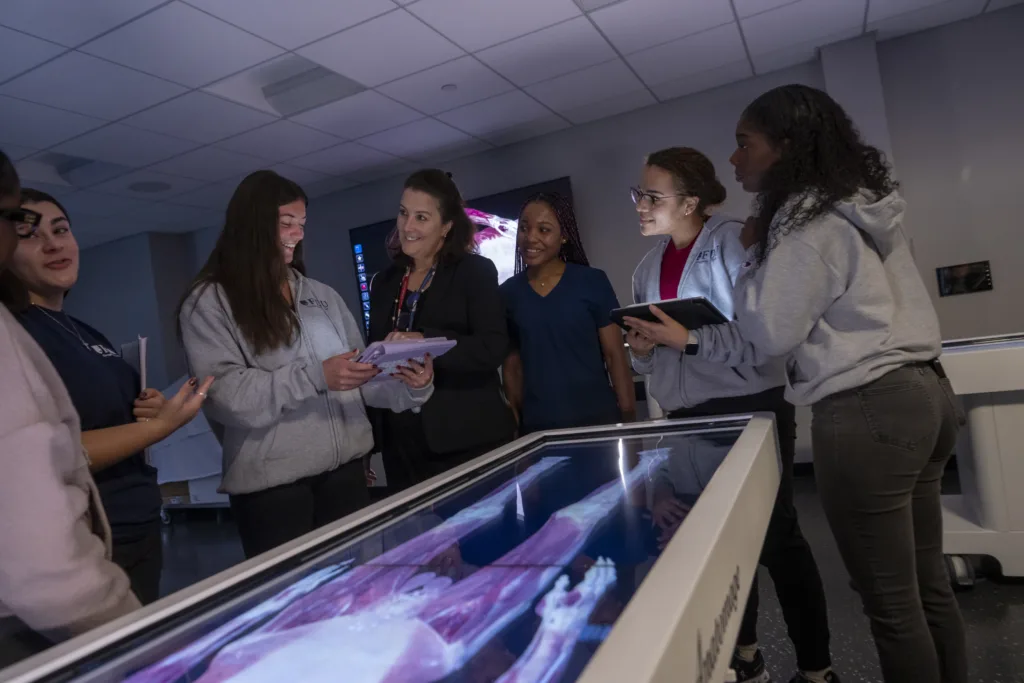
Her college brings together students studying pharmacy, medicine (physician assistants), social work, public health and occupational therapy, with opportunities to learn alongside students from other health programs across FDU. They practice collaboration in simulated environments and then carry those skills into clinical settings, where differences in expertise, responsibility and hierarchy become real.
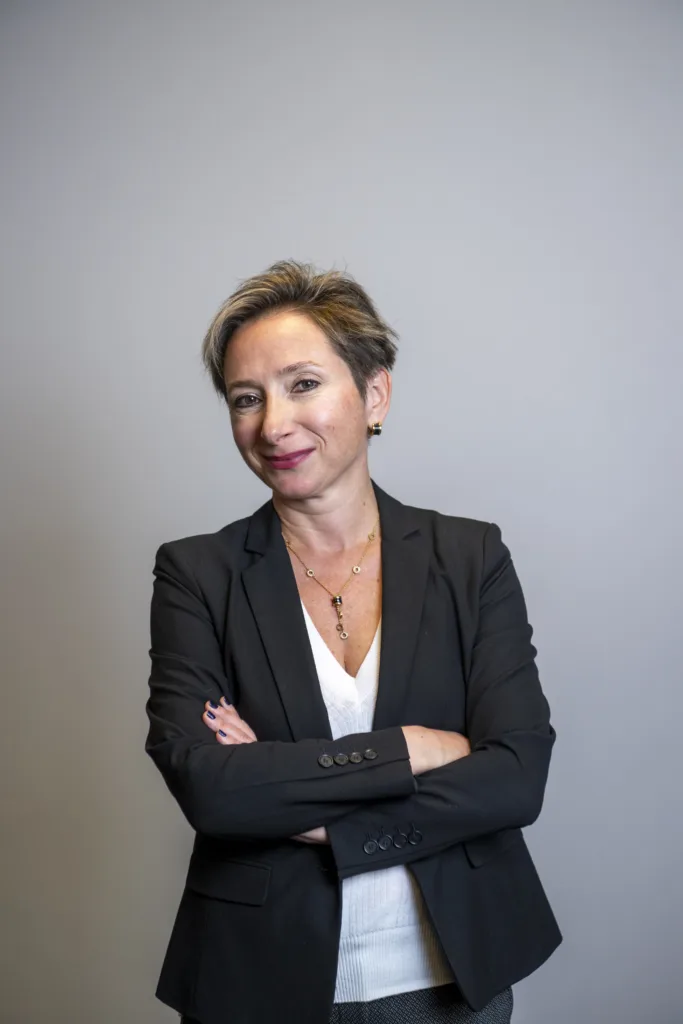
Anastasia Rivkin, dean of the College of Pharmacy and Health Sciences
Modern healthcare makes this kind of collaboration unavoidable. A patient’s needs rarely fit neatly within the boundaries of a single profession. Medication dosage decisions may require a pharmacist. A safe discharge could depend on a social worker learning whether someone has transportation, access to food or a way to pick up a prescription. Mobility, family dynamics, insurance and living conditions can all shape whether the care prescribed in a hospital actually works once a patient gets home.
No one clinician can — or should — be the expert in all of it.
That is why Chadwin Sandifer, executive associate dean of FDU’s College of Pharmacy and Health Sciences and chief innovation officer for FDU Health, argues that communication among health professionals deserves the same attention as communication between a clinician and a patient.
“Interprofessional communication is as important as the patient-provider communication,” Sandifer said.
FDU Health — formed in 2023 to provide a hub for interdisciplinary healthcare education and training for students pursuing bachelor’s, master’s and doctoral studies — itself is structured around that idea, bringing nursing, occupational therapy, pharmacy, physician assistant studies, psychology, counseling, social work and other health disciplines into a broader shared enterprise rather than treating them as entirely separate worlds.
That matters because, as Sandifer puts it, the siloed version of education does not resemble the workplace students are preparing to enter.
“It’s nice for us to all have our own identity,” he said. “But it’s not real when you enter into the workforce. You’re going to need to understand who does what and who has what expertise.”
For Sandifer, one of the biggest benefits of interprofessional education is learning who that expert is.
Knowing where your expertise ends is not a weakness. In a complex health system, it is another form of clinical judgment.
And this skill-building adds a new dimension to FDU’s broader humanics work. Much of the conversation about human-centered health care focuses naturally on the relationship between a clinician and a patient. But the people caring for that patient also have to know how to listen to one another, communicate across professional boundaries, recognize someone else’s expertise and ask for help.
Rivkin said FDU students practice in settings where professional roles may be relatively equal and in environments where clear hierarchies exist. The goal is to learn how to communicate effectively in both — to contribute expertise confidently, recognize someone else’s authority and keep the needs of the patient at the center of the interaction.
This is not just about communication and relationships among clinicians. Humanics at FDU is also about what becomes possible when people with different kinds of expertise are given the structure, trust and shared purpose to think together.
Stephen Klasko, MD, the former CEO of Thomas Jefferson University and Jefferson Health who recently joined FDU’s Board of Trustees and whose seed gift helped launch the Humanics Innovation Challenge, has spent much of his career arguing that healthcare needs ideas from people who were not trained to think like clinicians.
At Jefferson, he helped bring health sciences and design students into the same orbit, including informal “synergy” gatherings that led to cross-disciplinary projects and grants. At FDU, the humanics framework aims to create similar collisions — nursing students working with business students, pharmacists with psychologists and clinicians with storytellers.
“Innovation lives in the transitions between disciplines,” Klasko said.
The result FDU is aiming for is not a graduate who knows a little bit about everybody else’s profession. It is someone who understands their own well enough to know its limits, respects what other professionals know and has practiced the communication required to bring those different kinds of expertise together.
Sometimes the most important thing a clinician knows is the answer. Sometimes it is simply who to call.
HealthxHumanics™ (Health By Humanics) is the connective philosophy embedded throughout FDU HealthPath Forward. It ensures our graduates are:
- Tech-fluent and data-literate.
- Grounded in empathy and cultural competency.
- Agile, collaborative and ethically driven.
Our graduates are data-literate and tech-savvy — but equally skilled in human connection. They evaluate innovation through a human-centered lens, ensuring that patients, families, providers and communities remain at the heart of every decision.