The Limits of Empathy: Why Caring Well Also Requires Boundaries
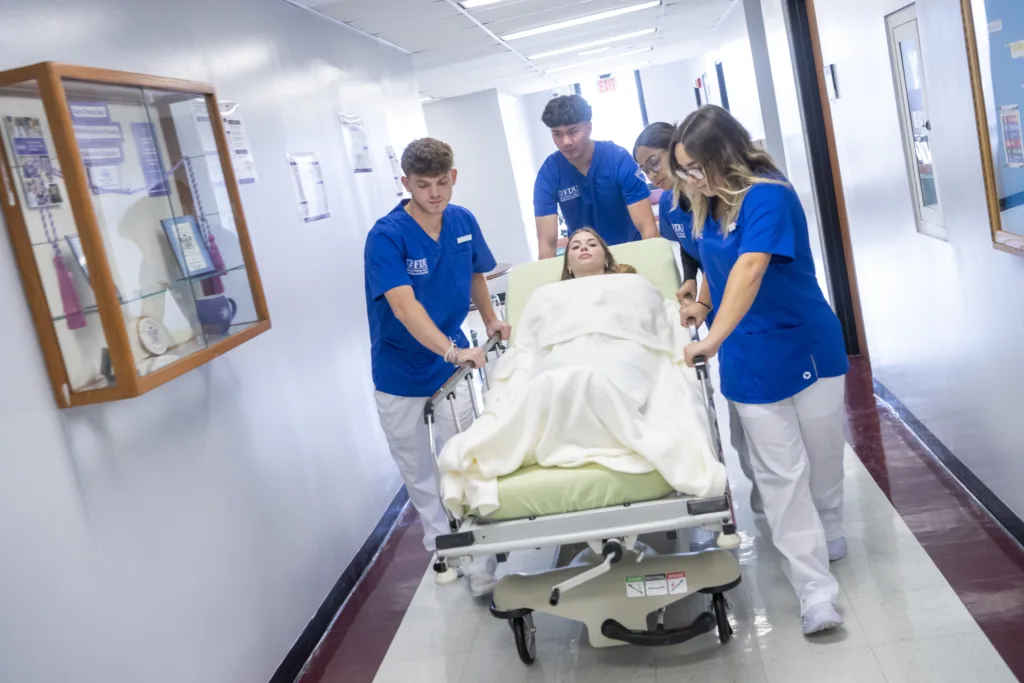
A nurse is nearing the end of a long shift when a trauma arrives.
Staying through the emergency is part of the job. But once the immediate crisis has passed and another team is there to take over, a different decision emerges: Go home or stay another hour or two to finish everything that follows?
For someone who entered healthcare because they want to take care of people, leaving can feel wrong.
Benjamin Freer, dean of Fairleigh Dickinson University’s Marion Turpan College of Psychology and Counseling, uses examples like this when discussing one of the more complex lessons FDU is trying to teach future health professionals: Caring deeply for others does not require ignoring your own limits.
Healthcare has long treated empathy as an uncomplicated virtue. Freer’s work starts from a more difficult premise. Research has also linked high levels of empathy to compassion fatigue, burnout, bias and decisions driven by immediate emotional responses rather than longer-term needs.
In other words, more empathy for others is not always the answer.
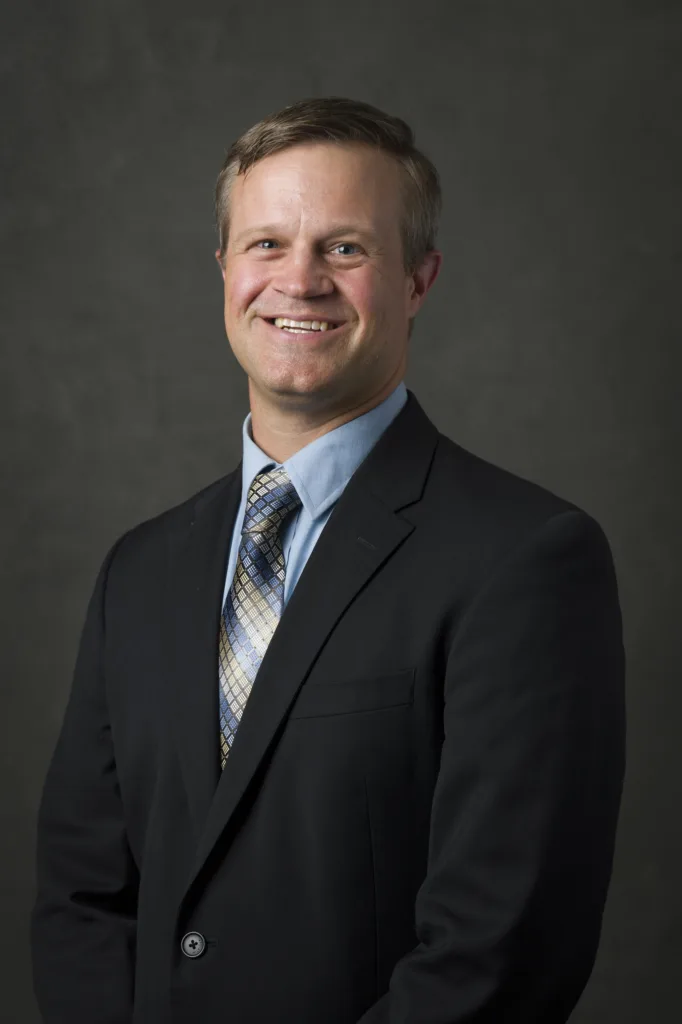
Ben Freer, dean of the Marion Turpan College of Psychology and Counseling
“We see a lot of guilt and shame that people carry when they have to say no,” Freer said. “We balance empathy for others with empathy for self — and we have to be intentional about both.”
Freer calls it a “binocular” approach to empathy: the ability to see another person’s needs clearly while keeping your own needs and responsibilities in view.
That distinction matters especially in healthcare, where self-sacrifice can easily become part of the professional culture. A nurse may need to stay beyond the scheduled end of a shift when an emergency arrives. But staying hours longer because it feels difficult to hand the work to another qualified colleague is different. Over a 20-year career, Freer argues, learning to recognize that difference matters.
The framework grew out of work Freer began before the COVID-19 pandemic. What eventually became FDU’s Empathy Center for Research and Training focuses not simply on encouraging people to be kinder, but on breaking empathy into skills that can be practiced.
That includes learning to pay attention to the cues around you, looking beneath someone’s immediate behavior to understand what may be driving it and moving from emotional reaction to thoughtful response. It also means recognizing what Freer calls “roadblocks” to empathy — the exhaustion, assumptions, workplace rules and everyday pressures that can make it harder to respond well to another person.
Sometimes, the obstacle is as simple as the phrase “that’s not my job.”
The empathic response does not necessarily mean taking on someone else’s responsibility, Freer said. It might mean saying, in effect: “That is not my job, but I know whose job it is, and I can help connect you.”
At FDU, this approach has moved from an optional training into the fabric of the institution. More than 300 students, faculty and staff have already participated in empathy training, often reporting greater confidence in taking other people’s perspectives and navigating interpersonal conflict.
And the work isn’t just limited to the classroom. FDU recently worked with Valley Health System to deliver training to roughly 300 employees across an emergency department — not only physicians and nurses, but also registration staff, cleaning staff and others who shape a patient’s experience.
Patients in need don’t just engage with physicians and nurses. They might interact with dozens of people during a hospital visit and empathy can look different depending on the role. For a physician, it may mean hearing a concern beneath a patient’s question. For someone at a registration desk, it may mean recognizing that frustration is being driven by fear.
FDU is now considering how to make that work even more tangible through its broader humanics initiative, which is designed to extend well beyond a single building or set of classrooms. The effort is intentionally cross-disciplinary, bringing together healthcare, psychology, business and technology programs around a shared focus on strengthening human skills — like empathy, communication, ethical judgment and collaboration — that technology cannot replace.
Plans for the humanics-focused space in Dickinson Hall on the Metropolitan Campus include areas for human interaction, measuring empathy and coaching communication. But the larger goal is to embed these competencies across the curriculum, so students repeatedly practice them in different professional contexts rather than encounter them for the first time in a high-pressure clinical setting.
For Annie Rohan, dean of FDU’s Henry P. Becton College of Nursing and Allied Health, that tension shows up often in how students talk about their work. “Compassion can make someone an exceptional nurse,” she said. “But without boundaries, it becomes very hard to sustain.”
This isn’t about teaching future clinicians to care less. It is to give them more tools for deciding what care requires in a particular moment — including when another person needs them, when a colleague can carry the work forward and when going home is not abandonment.
For the nurse at the end of the shift, both staying and leaving can be acts of responsibility. The skill is learning to know the difference.
HealthxHumanics™ (Health By Humanics) is the connective philosophy embedded throughout FDU HealthPath Forward. It ensures our graduates are:
- Tech-fluent and data-literate.
- Grounded in empathy and cultural competency.
- Agile, collaborative and ethically driven.
Our graduates are data-literate and tech-savvy — but equally skilled in human connection. They evaluate innovation through a human-centered lens, ensuring that patients, families, providers and communities remain at the heart of every decision.