More Than One Way Forward: Helping Students Find the Career That Fits
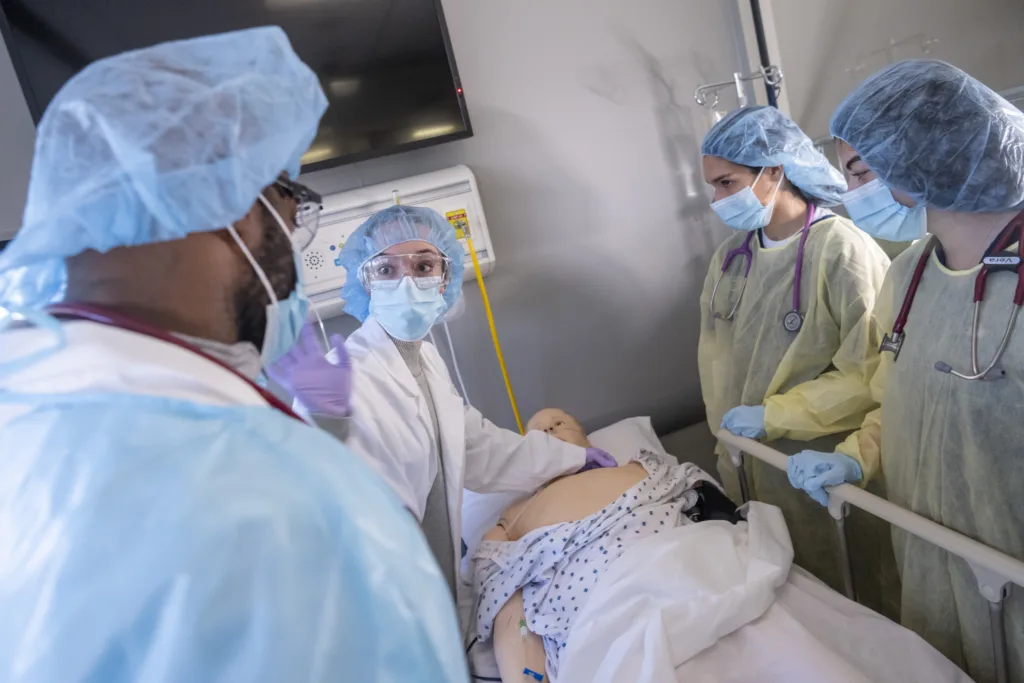
Choosing a college major can require an 18-year-old to make a remarkably expensive prediction about a person they barely know yet: themselves.
Chiara Muscara arrived at Fairleigh Dickinson University planning to pursue its 4+1 industrial and organizational psychology program. After taking an industrial psychology course, she realized that while she still loved psychology, that particular path wasn’t quite right.
“I had to pivot, so I started taking different classes — abnormal psychology, social psychology, statistics,” Muscara said. “I found I was really enjoying the research aspect of things.”
Now a senior, Muscara is writing an honors thesis on personality and artificial intelligence and applying to PhD programs.
Annie Rohan, dean of Fairleigh Dickinson University’s Henry P. Becton College of Nursing and Allied Health, has seen versions of that realization throughout her own career in health education.
A student may arrive convinced that nursing is the goal, only to discover, after meaningful exposure to the profession, that direct patient care may not be the right long-term fit. In highly structured professional programs, changing direction can feel especially difficult. It can also raise practical concerns about academic progress, financial investment and future career options.
To Rohan, however, the story does not have to end there.
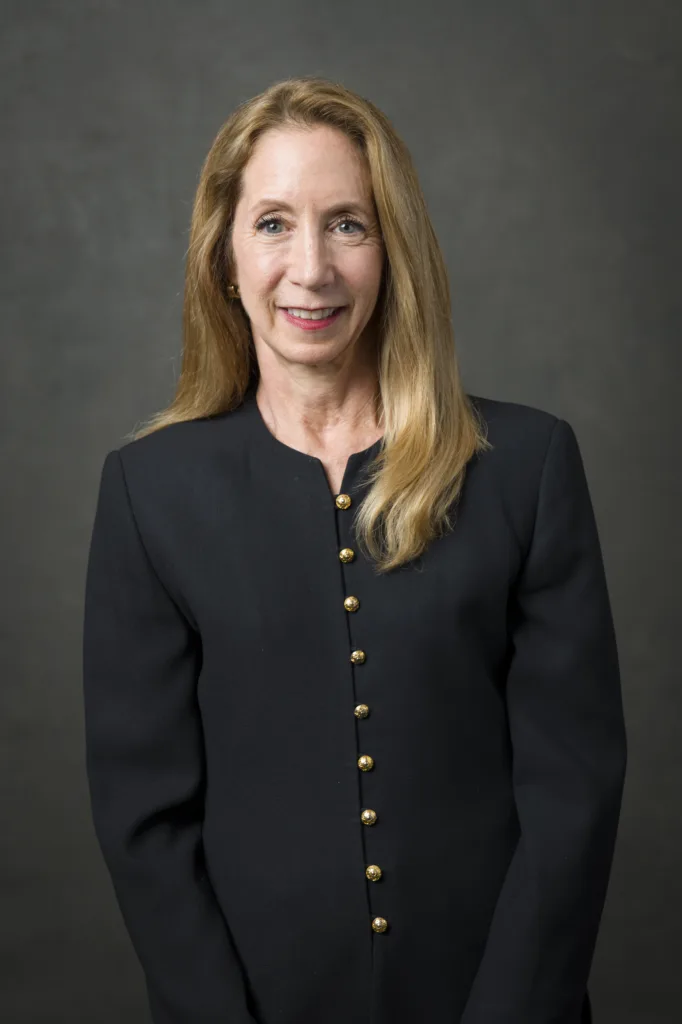
Annie Rohan, dean of the Henry P. Becton College of Nursing and Allied Health
“We need lots of people who are not patient-facing in healthcare,” she said.
Rohan sees health education as much broader than a single professional pathway. At the College of Nursing and Allied Health, for example, study includes nursing, radiography, respiratory therapy, allied health, health studies and other health-adjacent programs, giving students opportunities to pursue work that matches their strengths without necessarily leaving healthcare altogether.
That flexibility is part of a larger idea taking shape at FDU: a human-centered education should account for the fact that students are still discovering who they are, what they are good at and what kind of work will allow them to build a meaningful life.
And it’s core to the University’s approach to humanics, which identifies agility as one of the qualities students will need in a changing workforce. In this context, agility is not simply the ability to adapt to new technology or workplace demands. It can begin much earlier — with recognizing when a chosen path is no longer the right one and having another viable path available.
For some students, that process begins with opportunity itself.
Rohan describes FDU’s health professions students as coming from a wide range of backgrounds, and she sees that diversity as one of the program’s strengths. Some are first-generation college students who may not have had the same academic preparation or resources as their peers. Others might come to the program after already completing a bachelor’s degree or even built prior careers in areas like law, business or public service before deciding to pursue a health-related field.
Rohan frames it as part of the institution’s responsibility to meet students where they are and help them build toward success. Those different entry points create a student body shaped by a wide range of life experiences — and it is precisely that mix that strengthens the learning environment for everyone.
In an inclusive, flexible health education environment, there can be many paths to success. Associate degrees, certificates, bachelor’s degrees, graduate programs and professional pathways can serve as stepping stones rather than forcing every student into a single all-or-nothing track.
“Our goal is that students can leave with meaningful progress, credentials and options,” Rohan said.
Hands-on experience outside the classroom can be a critical part of forging an educational path. Across FDU’s health programs, students have opportunities to work with populations ranging from children and older adults to veterans and people experiencing homelessness. These service-learning experiences put students in contact with the realities of different kinds of health work before they have committed an entire career to one version of it.
This work is personal for Rohan, whose own path was not always a straight line. Like many of her students, she once believed there was only one path for a nurse. She chose to study nursing, spent decades in critical care, and only later in life returned to school to earn a doctoral degree, eventually moving into academic leadership. Her journey reflects a belief she now tries to pass on to students: careers are not fixed at the moment of choice, and there is always space to learn, grow and change course.
Along the way, each new opportunity opens another one. The goal is not to ask an 18-year-old — or even a seasoned professional returning to school — to predict an entire career correctly on the first try. It is to create enough pathways that learning more about yourself does not erase the progress you have already made.
At FDU, changing direction can still move a student forward.
HealthxHumanics™ (Health By Humanics) is the connective philosophy embedded throughout FDU HealthPath Forward. It ensures our graduates are:
- Tech-fluent and data-literate.
- Grounded in empathy and cultural competency.
- Agile, collaborative and ethically driven.
Our graduates are data-literate and tech-savvy — but equally skilled in human connection. They evaluate innovation through a human-centered lens, ensuring that patients, families, providers and communities remain at the heart of every decision.