
Center for Humanic Health Communication
The Center for Humanic Health Communication advances the study, teaching, and practice of communication across health education and professional environments.
Communication is not an ancillary professional skill. It is through communication that health professionals create and interpret knowledge, exercise judgment, build relationships, navigate technology, translate evidence, and lead.
The Center brings together students, educators, clinicians, communication scholars, editors, publishers, technology experts, employers, and other partners to develop, study, and disseminate innovative approaches to communication in increasingly complex and technology-rich health environments.
The Center’s work is organized around four interconnected pillars. Ethical Publication & Editorial Leadership, Digital Health Information Management, Meaningful Conversations, and Writing for the Profession. Across these pillars, the Center advances research and knowledge stewardship, educational innovation, partnerships, dissemination, and leadership development.
Ethical Publication & Editorial Leadership
Preparing current and future authors, reviewers, editors, and scholarly leaders to create and steward knowledge ethically and responsibly.
Scope
This pillar will advance how health professionals create knowledge, manage information, communicate meaningfully, and write for professional practice. Beginning with strong roots in nursing, humanism, and the health professions, the Center will bring together scholars, editors, authors, educators, students, and publishing professionals to examine how knowledge is created, evaluated, communicated, preserved, and used.
The Center will serve as a collaborative hub for research, education, innovation, and professional exchange. Its work will connect academic expertise with the practical experience of editors, publishers, professional organizations, and other partners engaged in scholarly communication.
Existing Initiatives
- Editorial Fellowship
- Editorial Leadership Intensive
- Qualified Peer Reviewer Program
- Writer’s Camp
- Publication ethics education
- Responsible use of AI in authorship and peer review
- Editorial history and preservation
- Partnerships with editors, journals, publishers, and professional organizations
Writer’s Camp, a scholarly communication initiative of Maine Desk LLC, will serve as an external partner, bringing an established platform for education, editorial innovation, professional development, research, and scholarly communication to the Center’s work. Maine Desk LLC was established in 2001 and celebrates its 25th anniversary in 2026; in 2025, it launched Writer’s Camp as a new initiative focused on scholarly communication, education, and editorial innovation.
Distinction:
Ethical Publication & Editorial Leadership = writing and communication that create and steward scholarly knowledge.
Writing for the Profession = communication required to function, advance, and lead in professional environments.
 Communication in Digital Health
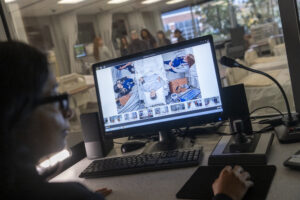
Developing the knowledge and judgment required to communicate, document, interpret, and manage information in digital health environments.
Scope
- EHR communication and documentation
- health information literacy
- informatics
- telehealth
- digital professionalism
- data interpretation
- AI-supported health information environments
- privacy and confidentiality
- evaluating information quality
- human judgment in digitally mediated care
Existing initiatives
- EPIC EHR training
- Caregility Telehealth training
- simulation and digital documentation
Meaningful Conversations
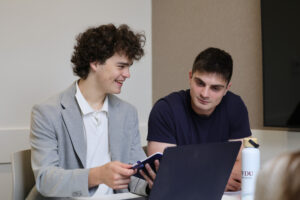
Strengthening purposeful human communication with patients, families, colleagues, learners, and professional communities.
Scope
- listening
- difficult conversations
- communicating uncertainty
- patient and family communication
- interprofessional communication
- feedback
- conflict
- health literacy
- shared decision-making
- cultural responsiveness
- empathy and presence
- communication through telehealth
- communicating with colleagues and teams
Existing initiatives
- Clinical Practice Resources GU examination immersion
- Dr. Runyon C.A.R.E Trauma-informed caring curriculum
Writing for the Profession
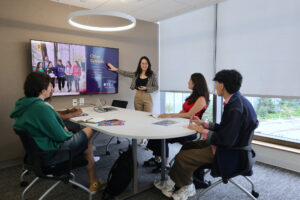
Preparing students and professionals to communicate effectively through the forms of writing required for practice, scholarship, employment, and leadership.
Scope
This pillar should be broader than “writing support.”
- professional correspondence
- workplace writing
- reports
- briefs
- clinical and technical writing
- professional presentations
- resumes and CVs
- cover letters
- personal statements
- grant writing
- writing for leadership
- translating technical information for different audiences
Distinction:
Ethical Publication & Editorial Leadership = writing and communication that create and steward scholarly knowledge.
Writing for the Profession = communication required to function, advance, and lead in professional environments.
How We Advance the Work
This is where the horizontals appear, but not as five giant sections.
I would present them as five simple icons or short blocks:
Knowledge Generation & Stewardship
Researching, evaluating, documenting, and preserving knowledge.
Educational Innovation
Designing and testing new approaches to teaching and learning.
Convening & Partnerships
Connecting disciplines, professions, organizations, and communities.
Dissemination & Translation
Moving knowledge and effective practices into broader use.
Leadership Development & Succession Planning
Preparing people to carry important professional and scholarly work forward.
Collaborate With the Center
The Center welcomes collaboration with students, faculty, health professionals, communication scholars, editors, publishers, technology partners, employers, professional organizations, and others interested in advancing humanic communication.
Students | Faculty & Researchers | External Partners
Looking Ahead
The Center builds on existing expertise, programs, technologies, partnerships, and educational initiatives while creating a broader interdisciplinary agenda for the future. Its roots in nursing and the health professions provide a strong environment in which to develop, study, and refine new approaches to communication in education and professional practice.
Over time, the Center will extend across disciplines, professions, and organizational boundaries, bringing together educators, students, health professionals, communication scholars, editors, publishers, technology partners, employers, and community stakeholders. Through these collaborations, the Center will generate knowledge, advance educational innovation, develop future leaders, strengthen professional communication, and disseminate approaches that can be adapted beyond FDU.